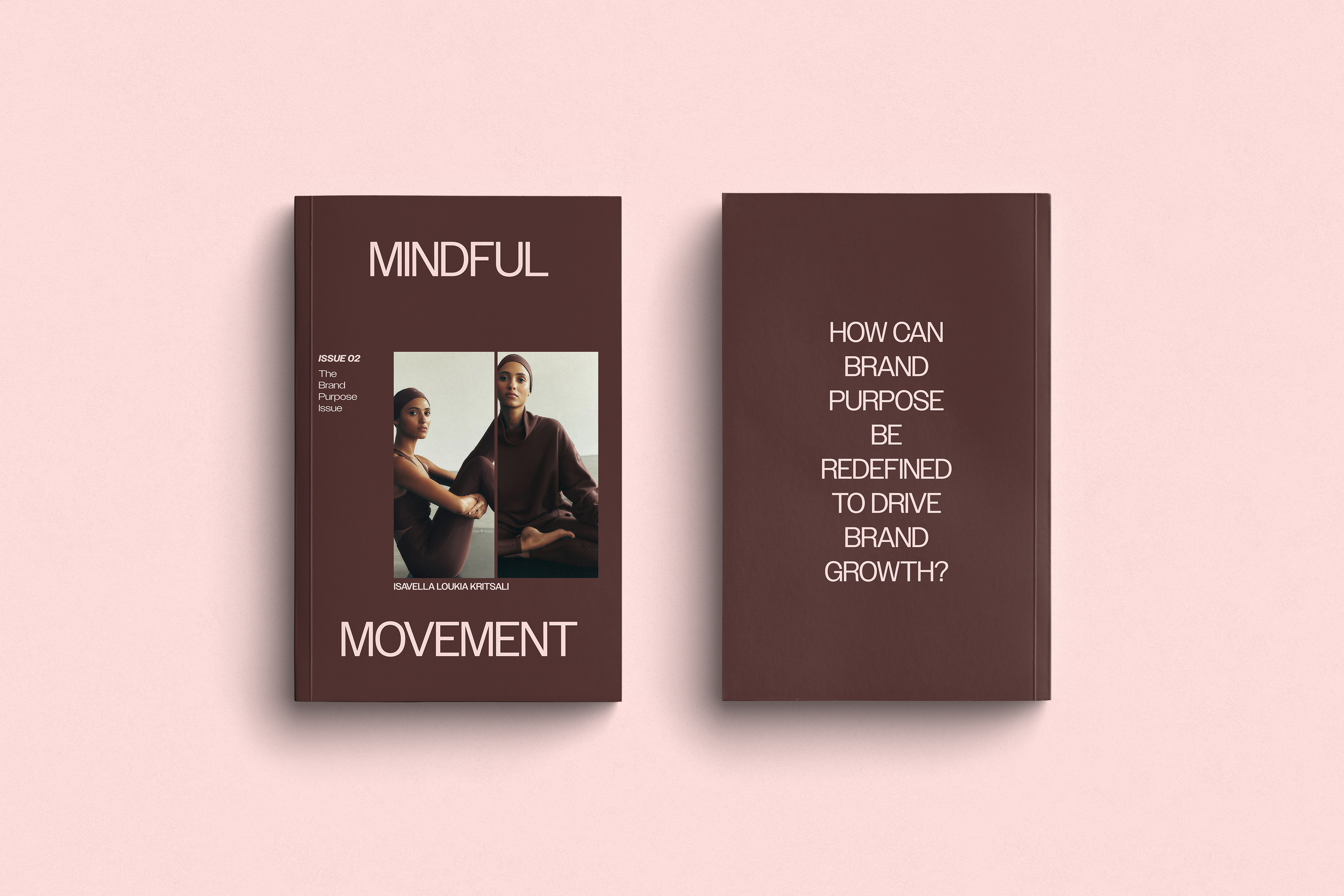
How can brand purpose be redefined to drive brand growth?

Brand purpose is dead. At least, that’s what much of the industry keeps saying. But others aren’t ready to bury it. They’re calling for a reset. I’m one of them.
Whenever I tell people I work in advertising, I feel the need to defend it. To explain, it’s not just about selling more stuff people don’t need. That advertising can create meaningful experiences, cultural moments, things that actually help people or the planet. I can see it on their faces. They want to believe me. But they're not convinced. And honestly? I get it. The industry hasn't made it easy to believe.
Still, I believe brands can do more. Yes, they exist to make money. But in doing so, they can also do good. They have the reach, resources, and influence. For me, the question isn't whether they should do good, but how.
That question led me here. To this project.
For my Master’s final project at the University of the Arts London, I created the second issue of Alo’s Mindful Movement. But rather than making another beautiful coffee table book about yoga, I wanted to explore something harder: the complicated relationship between brands doing good and doing good business.
So, I asked: How can brand purpose be redefined to drive brand growth?
I spent six months researching it. I studied the evidence for how brands actually grow – Byron Sharp, Orlando Wood and System1, Les Binet and Peter Field. Then I turned to real people – Gen Unwells navigating anxiety and uncertainty – trying to understand their realities, emotions, and needs, but also their relationship with brands. I used Alo as a case study, built prototypes, and tested what landed and what felt performative.
I set out to find Purpose 2.0 – a model that could resolve the tension between doing good and doing good business. But here’s the truth: it cannot exist. There is no single model that resolves the fundamental contradiction between purpose and selling more. But I did find starting points.
Three discoveries that can help narrow the gap:

DISCOVERY ONE: PURPOSE NEEDS TO BE GROUNDED IN REALITY
Purpose only resonates when it's grounded in two realities: the reality of the people it is trying to serve, and the reality of the brand itself.
When asked what makes purpose feel genuine, people do not talk about global problems or distant causes. They talk about their own lives – anxiety, financial pressure, social expectations. In that context, brands promising to change the world feel utopian and irrelevant. Yet, most purpose today floats above people’s actual lives, making lofty, grand promises while ignoring the emotional realities they face every day.
Grounding purpose in their reality also means showing up where they already are – building it into everyday environments, routines, and experiences, not something people have to seek out or work to access. It needs to meet them where they are both emotionally and literally.
Then there is the brand’s reality. Purpose needs to be grounded in what a brand actually does and can realistically offer. The gap between what a brand says and what is actually possible often becomes too wide to believe. Instead of abstract and unrealistic promises, people want brands to stay honest about their role and limits. In that sense, the strongest form of purpose is when it lives in the product itself: embedded in packaging, design, functionality, and production.
DISCOVERY TWO: PURPOSE NEEDS TO BE CONSISTENT
Grounding purpose in reality is just the beginning. It must also be consistent – because without consistency, people can't trust the commitment is real.
Time has become the ultimate authenticity test. The longer something endures, the more credible it becomes. People have learned to spot performative purpose from a mile away – Pride logos in June, mental health posts in May, causes adopted when trending and abandoned when not.
This is why origin stories carry so much weight. When purpose stems from a brand’s founding story, it signals continuity. It connects where the brand started to what it does now, making purpose feel like an extension of who the brand has always been. When purpose is added on later and appears suddenly without roots in the brand’s history, it feels unearned and opportunistic.
But consistency is not just about where purpose came from or how long it has existed – it is also about action. People expect to see commitment demonstrated through ongoing, visible effort across everything: how the brand communicates, what it makes, and where it shows up.
DISCOVERY THREE: PURPOSE NEEDS TO SOUND HUMAN
What a brand does matters. But how it talks about what it does matters just as much – because communication is often the first way people know a brand’s purpose exists.
And people respond to brands that communicate like humans. They want purpose that feels like it came from a human being; language that is warm, conversational, emotionally honest, and sometimes even vulnerable.
Yet most purpose communication does the opposite. It sounds corporate, rational, and performative. But corporate vocabulary creates distance. Human, everyday, emotional language is what creates connection.
This runs deeper than tone. It means showing real people and real stories. People connect with founder narratives rooted in struggle, unfiltered voices sharing messy experiences, stories where they see themselves reflected. Authentic stories create empathy and relatability in ways corporate messaging never can. That's how a brand stops feeling faceless and starts feeling human.
Together, these discoveries flow into one another. Grounded purpose defines what the brand commits to. Consistency proves that commitment is real. And human communication makes it resonate. Together, they can make purpose feel more genuine.
But they're not final answers – they're starting points. Starting points for any brand to approach purpose more honestly – grounding it in real human needs, validating it through growth evidence, and acknowledging the complex relationship between people, purpose, and profit.
Most importantly, they create space for honest conversation – for brands, marketers, and anyone in this industry to face these tensions rather than hide behind easy answers. These discoveries won't fix the system. But they offer a meaningful way to work within it.